
Buy Heroin
China White Drug: From Heroin to Synthetic Opioids
Nov
The Changing Identity of China White Drug
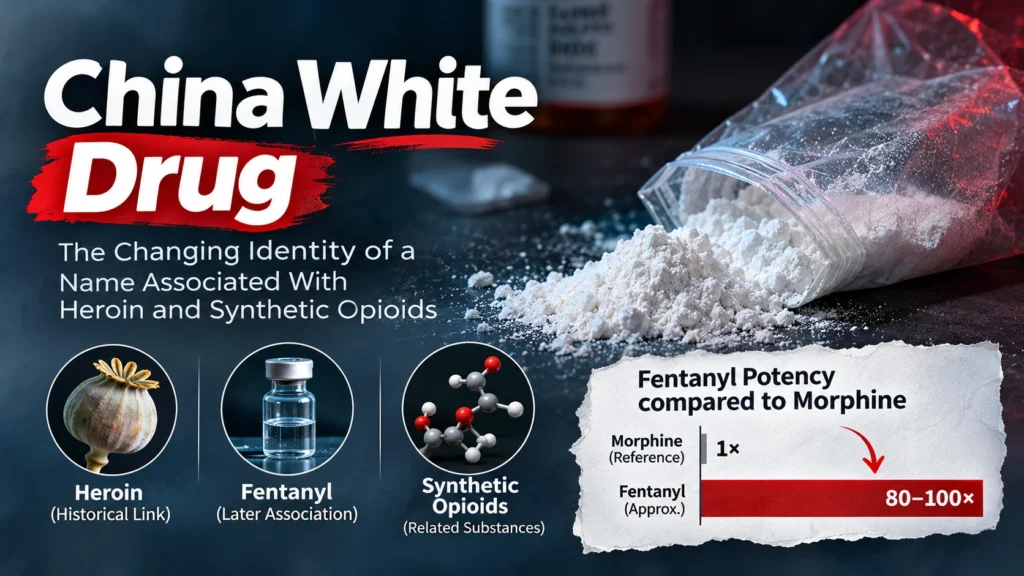
The term China White Drug has appeared in discussions about illicit opioids for decades. However, its meaning has not remained consistent. What was once associated with a particularly pure form of heroin has gradually become connected with other substances, including fentanyl and certain synthetic opioid derivatives. This changing identity has created confusion among the public, researchers, healthcare professionals, and people affected by substance use.
One important reason for this confusion is that street names do not follow the same standards as scientific chemical names. A term can describe different substances in different locations or periods. Consequently, understanding the history of China White requires looking beyond its name and examining the broader development of the illicit opioid market.
Research published in scientific journals and information from public health authorities also demonstrate why appearance and informal descriptions cannot establish the actual composition of an unidentified substance. This distinction has become increasingly important as illicit drug supplies have changed and synthetic opioids have become a significant public health concern.
The History Behind the China White Drug Name
Historically, China White was used as a street name for a very pure or white-looking form of heroin. The name was associated with the appearance and perceived origin of the substance. However, historical street terminology is not necessarily an accurate description of its chemical composition or manufacturing origin.
Historical accounts associate the original term with a form of heroin believed to have been imported from China. Over time, its meaning changed. The appearance of synthetic opioid derivatives created additional uncertainty, and the same street name began appearing in discussions about substances other than heroin.
This historical development illustrates a wider issue within illicit drug terminology. Street names are informal labels rather than scientifically controlled classifications. They can change according to regional usage, supply patterns, and public awareness.
Therefore, the historical meaning of China White should be distinguished from its more recent associations. Treating every reference to this term as evidence of one specific substance can create serious misunderstandings.
Why China White Is Associated With Different Opioids
The association between China White, heroin, and fentanyl reflects changes in the illicit opioid environment. Heroin is an opioid derived from morphine, whereas fentanyl belongs to a group of synthetic opioids developed for medical purposes. Although both affect opioid receptors, their chemical structures and pharmacological properties are different.
Fentanyl has legitimate medical applications, particularly in anaesthesia and pain management. However, non-pharmaceutical fentanyl and related substances have also appeared in illicit markets. Their presence has contributed to changing perceptions of traditional street-drug terminology.
China White has sometimes been used as a label for fentanyl, heroin mixed with fentanyl, and alpha-methylfentanyl. These associations demonstrate why the name cannot be treated as a reliable chemical identification.
Another important distinction concerns synthetic heroin. The expression is often used informally, but it does not mean that every substance described by this term has the same composition. In particular, fentanyl is a synthetic opioid rather than heroin. Confusing these categories can make public understanding of opioid-related risks more difficult.
Heroin, Fentanyl and the Differences Between Their Chemical Identities
Although heroin and fentanyl are both associated with opioid-related health risks, they are not interchangeable substances. Their origins, chemical structures, medical applications, and pharmacological characteristics differ.
Heroin is produced from morphine, which originates from the opium poppy. Fentanyl, in contrast, is manufactured synthetically. Pharmaceutical fentanyl is used in controlled medical settings, while illicitly manufactured versions create additional uncertainty about composition and strength.
Alpha-methylfentanyl is another synthetic opioid derivative discussed in historical research concerning China White. Its association with the street name demonstrates how terminology can evolve when new substances enter illicit markets.
The following table highlights the differences between these substances and explains why the street name should not be interpreted as a scientific classification.
| Substance or Term | Scientific or Historical Context | Important Distinction |
|---|---|---|
| Heroin | An opioid derived from morphine | Not chemically identical to fentanyl |
| Fentanyl | A synthetic opioid with medical applications | Illicit forms can create unpredictable exposure risks |
| Alpha-methylfentanyl | A synthetic fentanyl derivative | Different chemical identity from heroin |
| China White | An informal historical and street term | Does not identify one consistent chemical substance |
This distinction is particularly relevant when interpreting information from different countries. A term used in one historical report might not have the same meaning in a contemporary public health publication. Scientific identification must rely on appropriate analytical evidence rather than informal terminology.
What Research Says About Fentanyl Potency
One of the most important issues surrounding fentanyl is its potency relative to morphine. The United States Drug Enforcement Administration describes fentanyl as approximately 80 to 100 times more potent than morphine. European drug information also highlights its exceptionally high potency.
These figures help explain why fentanyl exposure is a significant public health concern. However, relative potency estimates should not be interpreted as a direct measure of individual overdose probability. Actual outcomes depend on multiple factors, including exposure, individual health, tolerance, and whether other substances are involved.
The following research-based comparison presents the approximate reference figures reported by the DEA. It illustrates relative potency estimates rather than dosing information or individual clinical outcomes.
Reported Fentanyl Potency Relative to Morphine
Reference point: Morphine = 1×.
| Reported Relative Potency Comparison | ||
|---|---|---|
| Reference | Relative Potency | Visual Representation |
| Lower reference estimate | 80× | ████████ |
| Upper reference estimate | 100× | ██████████ |
Research interpretation: The comparison illustrates the approximate 80–100-fold relative potency range reported by the DEA. These figures are reference estimates and do not represent an individual’s risk of overdose.
Understanding the Public Health Risks Associated With Opioids
Opioid-related risks extend beyond the chemical identity of an individual substance. The uncertainty surrounding illicit drug composition can make exposure particularly dangerous. A person may not know which substance is present, whether multiple opioids are involved, or how strong the exposure may be.
Information from the DEA highlights concerns about fentanyl appearing in illicit drug supplies and being associated with substances that people believe contain something else. This uncertainty creates an additional risk because individuals may not recognise the potential strength or effects of what they have encountered.
Scientific research examining changing heroin compositions also explores the presence of fentanyl-related substances. These findings highlight how perceptions of street-drug identity may differ from actual chemical composition.
These findings support an important public health principle: an informal street name, colour, texture, or general appearance cannot confirm the identity or safety of an unknown substance.
Why the Appearance of China White Cannot Confirm Its Composition
Descriptions of China White frequently refer to a white or pale powder. However, colour is not a reliable scientific method for identifying an opioid. Different substances can have similar appearances, while the same substance may appear different depending on impurities, adulterants, and other factors.
Illicit heroin may vary in purity, colour, and consistency. It may also contain other materials that change its appearance. These variations make visual identification unreliable.
Scientific research has also explored how people form assumptions about heroin and other substances based on their appearance. However, those perceptions do not necessarily reflect the substance’s actual composition.
This is an important distinction for readers. Descriptive information about a substance should never be mistaken for confirmation of its chemical identity. Laboratory analysis is required for reliable identification.
Short-Term and Long-Term Health Effects
Opioids affect the central nervous system and can influence several important bodily functions. The specific effects vary according to the substance, exposure, individual circumstances, and whether other drugs are involved.
Short-term effects associated with heroin use may include drowsiness, dizziness, confusion, nausea, vomiting, and slowed breathing. These effects can become especially concerning when respiratory depression occurs.
Fentanyl also acts on opioid receptors and can produce sedation and respiratory depression. Because of its potency, unintended exposure can lead to severe consequences. Combining opioids with alcohol, benzodiazepines, or other central nervous system depressants can further increase the risk.
Long-term opioid use may affect both physical and psychological health. Potential consequences include dependence, persistent sleep disturbances, constipation, nutritional difficulties, mood changes, and problems with everyday functioning.
Health risks are not limited to one particular drug or street name. They are connected to the pharmacological effects of opioids, patterns of exposure, and the wider circumstances surrounding substance use.
Recognising Opioid Overdose and Its Warning Signs
Opioid overdose is a medical emergency. One of the most dangerous effects is respiratory depression, in which breathing becomes dangerously slow or stops. Without timely intervention, the resulting lack of oxygen can cause permanent injury or death.
Warning signs associated with opioid overdose may include:
- Unresponsiveness or an inability to wake the person.
- Slow, shallow, or stopped breathing.
- Unusual gurgling or snoring sounds.
- Cold or clammy skin.
- Severe loss of consciousness.
- Very small or pinpoint pupils.
These symptoms are important because an overdose may not always look like an ordinary medical emergency. A person may appear to be sleeping, but they might actually be experiencing dangerously reduced breathing.
Anyone who suspects an opioid overdose should contact emergency services immediately. Naloxone can temporarily reverse opioid overdose effects and should be administered when available, following its instructions. Emergency medical assessment remains essential because symptoms can return after naloxone wears off.
Recognising these warning signs and understanding the importance of immediate medical intervention can make a meaningful difference in preventing avoidable deaths.
Dependence, Withdrawal and the Challenges of Recovery
Repeated opioid exposure can lead to physical dependence. This means the body adapts to the presence of the substance, and withdrawal symptoms may develop when use stops or decreases.
Possible heroin withdrawal symptoms include anxiety, restlessness, sweating, insomnia, abdominal cramps, muscle spasms, nausea, vomiting, and diarrhoea. The severity and duration can differ between individuals.
Substance use disorders can also affect family relationships, employment, financial stability, and emotional well-being. These challenges demonstrate why opioid dependence should be approached as a health issue rather than simply a matter of personal behaviour.
Evidence-based treatment can include medical assessment, opioid agonist medications such as buprenorphine or methadone, psychological support, and continuing recovery services. Treatment decisions should be made with qualified healthcare professionals.
Recovery is not necessarily a straightforward process. Individuals may require ongoing support, adjustments to treatment, and assistance with the social and psychological factors associated with substance use.
How Scientific Research Helps Clarify Changing Drug Terminology
Scientific research plays an important role in understanding substances that are described using informal street names. Unlike street terminology, scientific publications examine chemical identity, pharmacological characteristics, patterns of exposure, and potential health consequences. This allows researchers to distinguish between substances that may otherwise be grouped under the same informal label.
Research published in the National Library of Medicine has examined changing perceptions of heroin and fentanyl-adulterated substances. It highlights how individuals’ descriptions and expectations do not always correspond with the actual composition of the substances being discussed. This is particularly relevant when a familiar street name continues to be used despite changes in the illicit supply.
Public health organisations also contribute through surveillance, toxicological analysis, and reporting of overdose trends. These activities help identify emerging substances and improve understanding of changing risks. However, findings from one location or period should not automatically be applied to every region or contemporary drug supply.
Another important consideration is the difference between pharmaceutical and non-pharmaceutical substances. A drug may have a recognised medical application under controlled conditions while its illicitly manufactured counterparts create substantially different risks. Fentanyl provides an important example of this distinction.
Consequently, readers should evaluate information about China White by considering the date, geographical context, scientific terminology, and reliability of the original source. Combining historical research with public health information provides a more accurate understanding than relying on street names alone.
Why Accurate Information About China White Matters
The changing meaning of China White demonstrates how easily informal terminology can create confusion. A term that once referred to a particular type of heroin may later be associated with fentanyl or other synthetic opioids.
For researchers, healthcare professionals, journalists, and members of the public, accurate terminology is essential. Misidentifying a substance can lead to incorrect assumptions about its effects, potential exposure, and associated health risks.
Reliable public health information should therefore distinguish historical descriptions from confirmed chemical identities. It should also explain the limitations of street terminology and emphasise the importance of laboratory testing and professional medical assessment.
The research reviewed here presents a consistent message: the illicit opioid environment can change, and informal names do not provide dependable evidence about composition. Understanding this uncertainty is an important part of opioid awareness and overdose prevention.
Frequently Asked Questions
What does China White Drug mean?
China White is a historical street term that was originally associated with a relatively pure form of heroin. In later usage, it has also been associated with fentanyl and certain synthetic opioid derivatives.
Is China White the same as fentanyl?
No. China White is an informal street name, whereas fentanyl is a specific synthetic opioid. The street term has been used in different contexts and does not establish chemical identity.
Why is China White associated with synthetic heroin?
The term became associated with synthetic opioids as the illicit drug market changed. Some historical and contemporary discussions use it when referring to fentanyl-related substances, although the terminology is inconsistent.
Can the composition of China White be identified by appearance?
No. Colour, texture, and general appearance cannot reliably establish chemical composition. Appropriate laboratory analysis is necessary for identification.
Why is fentanyl considered particularly dangerous?
Fentanyl is a highly potent synthetic opioid that can cause severe respiratory depression. Illicit exposure is especially concerning because the actual composition and strength may be unknown.
What should someone do if an opioid overdose is suspected?
Contact emergency services immediately. Administer naloxone if available and follow the product instructions. Do not leave the affected person alone while waiting for professional assistance.
Where can people find help for opioid dependence?
People experiencing opioid dependence can seek support from qualified healthcare professionals, addiction treatment services, and recognised public health organisations. Medical treatment and ongoing recovery support can help reduce health risks.
