
Aug
This educational article explores the history, geography, drug policy, and public health context surrounding coca cultivation in Bolivia and its relationship to cocaine. It does not encourage, promote, or provide guidance on illegal drug use or distribution.
The Coca Plant: A Deep Andean History
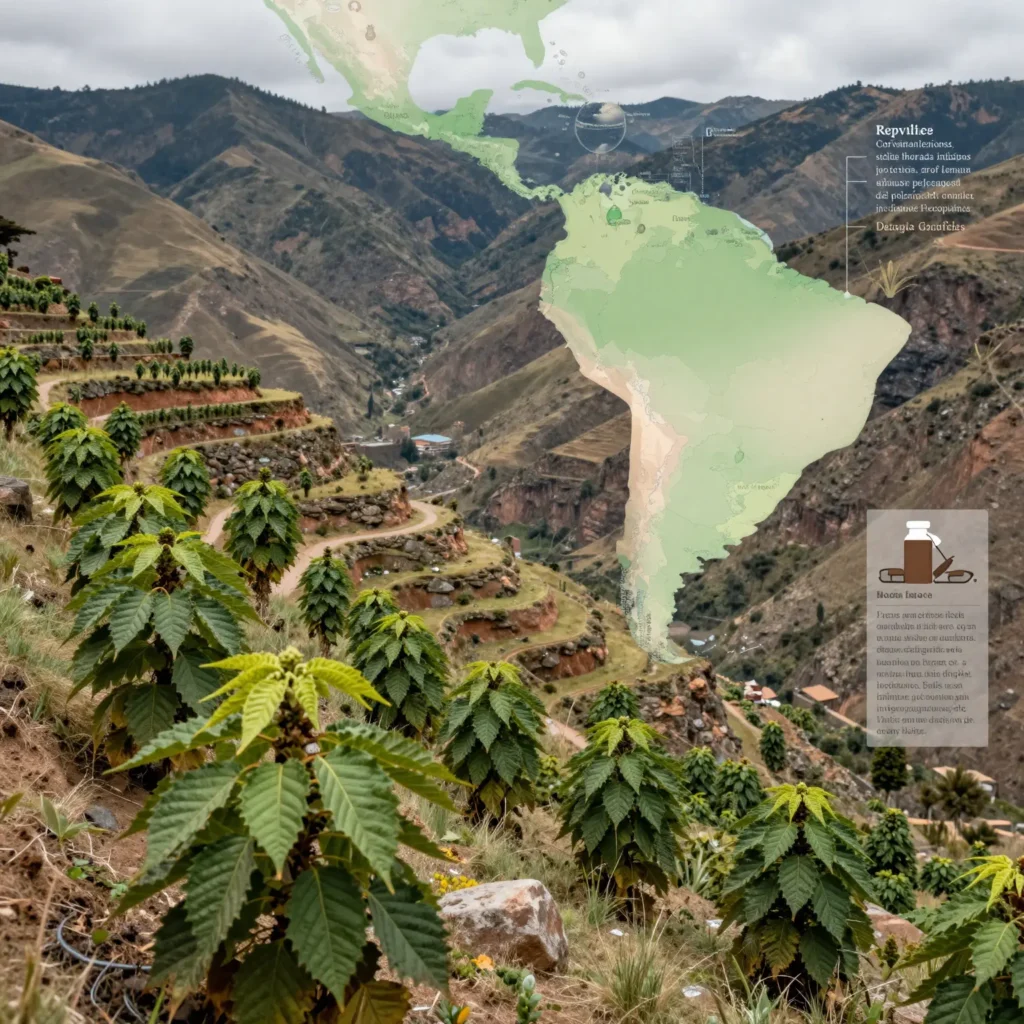
Coca grows on the eastern slopes of the Andes, especially in Bolivia and Peru. Andean peoples have chewed coca leaves and used them in rituals for thousands of years. Archaeologists trace this practice back at least 3,000 years, and some estimates push it further still.
For Indigenous communities, coca serves purposes far beyond drug production. People chew the leaf or brew it as tea, known as mate de coca, to cope with the cold and altitude of the highlands. Coca also plays a role in social exchange, religious ceremony, and traditional medicine. Bolivia protects coca leaf chewing as a legal, culturally significant practice.
Coca leaves contain the cocaine alkaloid, but only in small concentrations — roughly 0.5 to 1 percent by weight. Chewing the leaf or drinking coca tea produces none of the intense effects associated with refined cocaine. Producing cocaine requires an industrial extraction and concentration process, which sets it apart entirely from traditional coca use.
Separating the traditional coca leaf from refined cocaine gives a clearer, more accurate picture of Bolivia's history and culture.
From Leaf to Drug: Why the Distinction Matters
Cocaine as most people know it — a white powder or crystalline "crack" form — didn't exist until the 19th century. Chemists first isolated the cocaine alkaloid from coca leaves during that period. Manufacturers briefly used cocaine in medicine and consumer products before its risks became clear; most countries then brought it under strict legal control in the early 20th century.
Because of this history, researchers and policymakers draw a firm line between two very different things:
- The coca leaf, a plant with legal, traditional uses in parts of the Andes.
- Refined cocaine, a controlled substance produced through chemical processing and restricted almost everywhere.
Conflating coca farming with cocaine trafficking misses both the cultural reality on the ground and how the illegal drug trade actually works, where refinement and distribution networks matter more than the raw crop.
Bolivia's Position in International Drug Policy
Bolivia has taken an unusually direct stance in international drug policy. The country was long party to the 1961 UN Single Convention on Narcotic Drugs, which classified coca leaf chewing as a practice governments should phase out — a provision many Bolivians viewed as disrespectful of Indigenous tradition.
Bolivia withdrew from the Single Convention in 2011 specifically over that clause. It rejoined in 2013 with a formal reservation protecting the legal, traditional use of coca leaf within its borders. This move made Bolivia a notable case study: a country asserting that domestic cultural practice and international narcotics control can coexist.
Bolivia also runs its own domestic coca policy, often called "social control." Organized grower associations work with government-set limits on coca cultivation and negotiated reduction targets, rather than relying purely on enforcement-driven eradication. Researchers continue to study how well this model reduces cocaine production compared to eradication-first approaches used elsewhere.
Bolivia's approach feeds a broader debate: whether enforcement-focused strategies or development-focused strategies do more to reduce cocaine-related harm.
Public Health Dimensions of Cocaine Use
Cocaine carries well-documented health risks. Public health agencies, including the World Health Organization, describe cocaine as a stimulant with a significant potential for dependence. Regular or heavy use raises real cardiovascular, neurological, and psychological risks.
Public health responses generally emphasize four things: prevention and education that reduce early experimentation; treatment access, including counseling and medical support for substance use disorders; harm reduction, which lowers health risks for people not yet ready to stop; and ongoing research into effects and treatment.
| Area | Focus |
|---|---|
| Prevention | Education aimed at reducing early experimentation, especially among young people. |
| Treatment | Evidence-based care, including counseling and medical support. |
| Harm Reduction | Lowering health risks for people who aren't ready or able to stop. |
| Research | Ongoing study of cocaine's effects and effective treatment approaches. |
Frequently Asked Questions
Is the coca plant the same as cocaine?
No. Coca is a plant with a long history of legal, traditional use in the Andes. Cocaine is a refined chemical product, illegal to produce or possess in most countries.
Why is coca leaf legal in Bolivia?
Bolivia protects coca leaf chewing and traditional use as a cultural practice, formalized through its 2013 reservation to the UN Single Convention on Narcotic Drugs.
Does growing coca automatically mean producing cocaine?
No. Most Bolivian coca supplies traditional domestic uses like chewing and tea. Producing cocaine requires additional chemical processing and remains illegal separately from cultivation.
Where can readers find reliable information?
Look to peer-reviewed research, UN Office on Drugs and Crime reports, World Health Organization publications, and academic Andean studies programs.
Final Thoughts
Bolivia's association with cocaine in popular discussion flattens a much richer history: an ancient agricultural tradition, a 19th-century chemical discovery, a 20th-century wave of drug control, and an ongoing debate over how to reduce drug-trade harm. Looking at each piece on its own terms gives a far more accurate picture of the country and the policy challenges it navigates.
This article serves educational purposes only. It does not encourage or endorse illegal activity. Laws and public health guidance vary by country, so consult official sources for current information.
