Buy cocaine
Heroin: Health Effects, Addiction, and Recovery
Nov
The Hidden Impact of Heroin on Health, Behavior, and Everyday Life
Some health challenges develop gradually, affecting far more than a person’s physical condition. Substance dependence is one example. What may initially appear to be an isolated health concern can eventually influence emotional well-being, family relationships, professional responsibilities, and everyday decision-making. Heroin is one substance associated with these wider consequences because of its powerful effects on the brain and central nervous system.
Understanding heroin requires looking beyond its immediate effects. Its influence can extend to physical health, mental health, social relationships, and long-term stability. Heroin addiction is not simply a matter of personal choice or willpower; it is a complex medical condition that can require professional assessment and ongoing support.
Public health organizations continue to examine heroin-related harm, overdose patterns, opioid dependence, and access to effective treatment. Their research helps explain why awareness, early intervention, and evidence-based recovery services remain important.
How Heroin Affects More Than Physical Health
Heroin is an illegal and highly addictive opioid derived from morphine, a substance associated with the opium poppy plant. It acts on opioid receptors in the brain and other parts of the nervous system. These receptors are involved in pain perception, reward, and several essential bodily functions.
One reason heroin presents significant health concerns is its effect on the brain’s reward system. The substance can produce intense feelings of pleasure, followed by changes in alertness, mood, and physical functioning. Repeated exposure can lead to tolerance, meaning the body becomes less responsive to the substance over time.
Heroin dependence can develop alongside changes in behavior and priorities. Individuals may experience persistent cravings, difficulty controlling substance use, and continued use despite negative consequences. These patterns can affect education, employment, financial stability, and personal relationships.
The wider impact is important because heroin-related problems do not always remain visible to other people. Someone experiencing dependence may continue fulfilling certain responsibilities while struggling privately with cravings, withdrawal symptoms, anxiety, or other health complications.
The Connection Between Heroin, the Brain, and Behavior
Opioid receptors influence several processes within the nervous system. When heroin activates these receptors, it can change pain perception and produce sedation and euphoria. It can also slow important automatic functions, particularly breathing.
Repeated exposure can alter how the brain responds to rewards and everyday experiences. Activities that previously provided satisfaction may become less rewarding, while obtaining and using the substance can increasingly dominate a person’s attention.
This helps explain why heroin addiction can continue even when someone understands its negative consequences. Addiction is a medical condition involving biological, psychological, and environmental factors. It should not be reduced to a lack of discipline or personal responsibility.
Recognizing these changes can help families and communities respond with appropriate support rather than relying entirely on blame or stigma.
Physical Effects and Long-Term Health Concerns
The effects of heroin vary between individuals. They can depend on a person’s health, the composition of the substance, other medications or drugs involved, and previous exposure.
Short-term heroin effects may include drowsiness, nausea, vomiting, itching, dry mouth, and slowed breathing. More serious effects can involve dangerously reduced respiratory function and loss of consciousness.
Long-term heroin use can be associated with several medical complications. These may affect multiple organs and systems rather than one isolated part of the body.
| Health area | Potential effects | Why it matters |
|---|---|---|
| Respiratory system | Slowed breathing and respiratory complications | Severe respiratory depression can become life-threatening. |
| Brain and nervous system | Changes in alertness, dependence, and neurological functioning | Can affect judgment, attention, and everyday activities. |
| Liver and kidneys | Possible organ-related complications | Long-term health problems may require medical evaluation. |
| Skin and bloodstream | Abscesses and bacterial infections | Infections can become serious without appropriate care. |
| Heart | Infections involving heart structures, including endocarditis | Some infections can require urgent medical treatment. |
| Mental health | Psychological distress and co-occurring mental health problems | Can complicate recovery and overall well-being. |
These risks are especially important for people who inject drugs because bloodborne infections, including HIV and hepatitis, may occur through contaminated or shared equipment. Medical assessment can help identify infections and other complications early.
Heroin Overdose and the Importance of Public Awareness
A heroin overdose occurs when opioid effects become severe enough to threaten essential bodily functions. One of the most serious consequences is respiratory depression, in which breathing becomes dangerously slow or stops.
Reduced oxygen supply can cause brain injury, unconsciousness, coma, and death. The risk can increase when heroin is combined with alcohol, benzodiazepines, or other substances that suppress the central nervous system.
Another important concern is the unpredictable composition of illegal drug supplies. A person may not know the actual contents or strength of a substance. The presence of synthetic opioids, including illicitly manufactured fentanyl, can substantially increase overdose danger.
Possible signs of an opioid overdose include:
- Unresponsiveness or inability to wake the person.
- Slow, irregular, or absent breathing.
- Very small or pinpoint pupils.
- Unusual snoring, choking, or gurgling sounds.
- Pale, cold, or clammy skin.
- Blue or grey lips and fingertips.
An overdose is a medical emergency. Emergency services should be contacted immediately. Naloxone can temporarily reverse opioid overdose and may restore breathing, but emergency medical assessment remains necessary because symptoms can return.
Public access to overdose education and naloxone can help communities respond more effectively. Recognizing the signs early can make a critical difference.
What Published Data Reveal About Heroin-Related Deaths
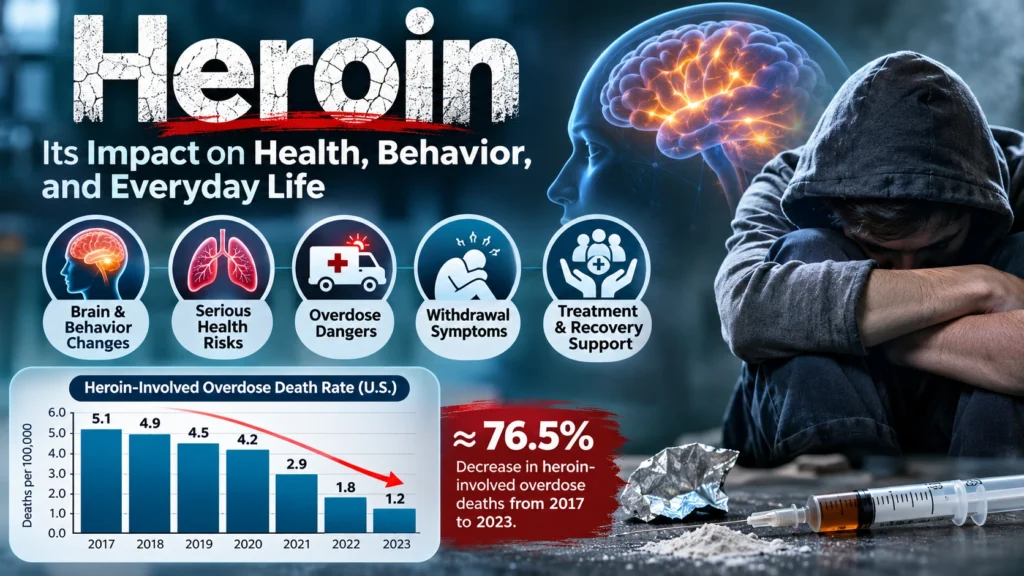
Research from the United States National Center for Health Statistics provides a useful perspective on changes in heroin-involved overdose death rates. Its published analysis reports age-adjusted rates per 100,000 people for selected opioids.
The data show a declining trend in the heroin-involved overdose death rate between 2017 and 2023. However, this decline should not be interpreted as evidence that heroin-related harm has disappeared. Other synthetic opioids, particularly fentanyl, have become major contributors to the wider overdose crisis.
Research-Based Chart: Heroin-Involved Overdose Death Rates, 2017–2023
Chart metric: Age-adjusted deaths involving heroin per 100,000 standard population in the United States.
United States | Heroin-involved overdose death rate
5.1
2017
4.9
2018
4.5
2019
4.2
2020
2.9
2021
1.8
2022
1.2
2023
Research interpretation: The reported rate declined from 5.1 in 2017 to 1.2 in 2023, a reduction of approximately 76.5%. The NCHS report also identifies a statistically significant decreasing trend over this period. These figures describe heroin-involved overdose deaths, not all opioid-related deaths.
Important limitation: This is United States data. It should not be presented as a worldwide estimate or as a measurement of heroin use in other countries.
Exact chart placement: Insert this chart immediately after the paragraph discussing the NCHS research and before the next section, “Why Overdose Trends Need Careful Interpretation.” Keep the source and interpretation directly underneath the chart.
Why Overdose Trends Need Careful Interpretation
A decrease in heroin-involved overdose deaths does not necessarily mean that the overall opioid crisis has been resolved. Changes in the illegal drug supply can influence which substances are most commonly involved in overdose incidents.
The CDC has reported that heroin has largely been replaced in parts of the United States illegal drug supply by illicitly manufactured fentanyl. Its 2025 heroin overview also explains that heroin may be combined with fentanyl, creating additional uncertainty and risk.
This distinction is important when interpreting public health statistics. A person may be exposed to more than one opioid without knowing the actual composition of the substance involved.
For this reason, public health organizations examine multiple indicators, including overdose deaths, emergency medical incidents, treatment access, and changes in substance availability.
How Heroin Dependence Can Affect Relationships and Everyday Life
Heroin addiction can influence nearly every part of a person’s daily routine. Persistent cravings and withdrawal symptoms may make it difficult to maintain consistent employment, educational commitments, or family responsibilities.
Relationships can also become strained. Family members may experience anxiety, uncertainty, financial pressure, and emotional exhaustion. Communication problems can develop when substance use becomes a source of conflict or secrecy.
These difficulties should not be viewed as proof that recovery is impossible. They highlight why treatment should consider the person’s wider circumstances rather than focusing only on the physical symptoms of dependence.
Support from family members, healthcare professionals, counselors, and community organizations can help create a more stable environment for recovery.
Heroin Withdrawal Symptoms and the Recovery Process
When someone who has developed physical dependence stops or reduces opioid exposure, the body may experience withdrawal. Heroin withdrawal symptoms can involve both physical discomfort and psychological distress.
Common symptoms include:
- Anxiety, agitation, and restlessness.
- Muscle and bone pain.
- Sweating and cold flashes.
- Runny nose and increased tearing.
- Difficulty sleeping.
- Abdominal cramps and diarrhea.
- Nausea and vomiting.
- Strong cravings.
The timing and intensity of symptoms vary between individuals. Previous substance exposure, overall health, and other medical conditions can influence the experience.
Heroin detox is not the same as complete addiction treatment. Detoxification focuses on managing withdrawal and immediate medical needs. Long-term recovery may require medication, behavioral support, follow-up appointments, and assistance with housing, employment, or other practical challenges.
Returning to opioid use after a period of abstinence can be especially dangerous because tolerance may have decreased. This increases the risk of overdose if someone returns to their previous level of exposure.
Evidence-Based Heroin Addiction Treatment Options
Heroin addiction treatment is available, and recovery is possible. Healthcare professionals generally assess a person’s medical history, substance exposure, mental health, and individual treatment needs before recommending an appropriate approach.
Medications for opioid use disorder are an important part of evidence-based care. Methadone and buprenorphine are among the medicines used in appropriate clinical settings. They can help manage withdrawal symptoms and cravings and support longer-term treatment.
Naltrexone may also be considered for selected patients after an appropriate period without opioids. A healthcare professional must determine whether it is suitable.
Behavioral treatment can complement medication. Counseling and structured support may help individuals understand triggers, manage stress, improve relationships, and develop healthier routines.
| Treatment approach | Primary purpose | Role in recovery |
|---|---|---|
| Medical assessment | Identify health concerns and treatment needs | Provides an individualized starting point. |
| Methadone treatment | Support management of opioid dependence | Can reduce withdrawal symptoms and cravings. |
| Buprenorphine treatment | Support opioid use disorder treatment | Can help stabilize recovery and reduce overdose risk. |
| Naltrexone | Block opioid effects in suitable patients | May be an option following appropriate clinical assessment. |
| Behavioral counseling | Address psychological and behavioral factors | Supports coping skills and longer-term stability. |
| Community support | Improve social connection and ongoing assistance | Can help maintain engagement with recovery services. |
There is no single treatment plan that works identically for everyone. Evidence-based care should be individualized and delivered through qualified healthcare providers.
Reducing Stigma Around Heroin Addiction
Stigma remains a major barrier to treatment. People experiencing heroin dependence may avoid seeking assistance because they fear judgment, discrimination, or social exclusion.
Using respectful language can help change this situation. Describing someone as a person with a substance use disorder, rather than defining them by their condition, recognizes their dignity and ability to recover.
Families and communities can contribute by encouraging professional support, avoiding harmful assumptions, and recognizing addiction as a health condition.
Access to reliable information is equally important. Misleading claims about heroin effects, street names, withdrawal, or recovery can create confusion and discourage people from seeking appropriate care.
Building a Healthier Path Beyond Dependence
Recovery often involves more than stopping substance use. People may need support rebuilding relationships, returning to work, addressing financial difficulties, and managing co-occurring physical or mental health conditions.
Regular medical follow-up can help identify complications and adjust treatment when necessary. Psychological support may also help individuals manage stress, anxiety, trauma, or other challenges that can affect recovery.
Relapse should be treated as a reason to reassess care rather than as proof that treatment has failed. Ongoing support and appropriate clinical interventions can make a meaningful difference.
Friends and family members can also benefit from education and support. Understanding the nature of dependence helps them respond more constructively and recognize situations that require urgent medical attention.
Final Perspective
The impact of heroin extends beyond immediate physical effects. It can influence brain function, emotional health, family relationships, and wider community well-being. Understanding these connections is essential for improving awareness and reducing preventable harm.
Research from organizations such as the CDC, NIH, and National Center for Health Statistics provides valuable information about heroin effects, overdose trends, dependence, and treatment. These findings also demonstrate why statistics should be interpreted carefully and within their proper context.
Most importantly, heroin addiction is a treatable medical condition. Professional assessment, evidence-based medication, behavioral support, and continued care can help individuals move toward a healthier and more stable future.
